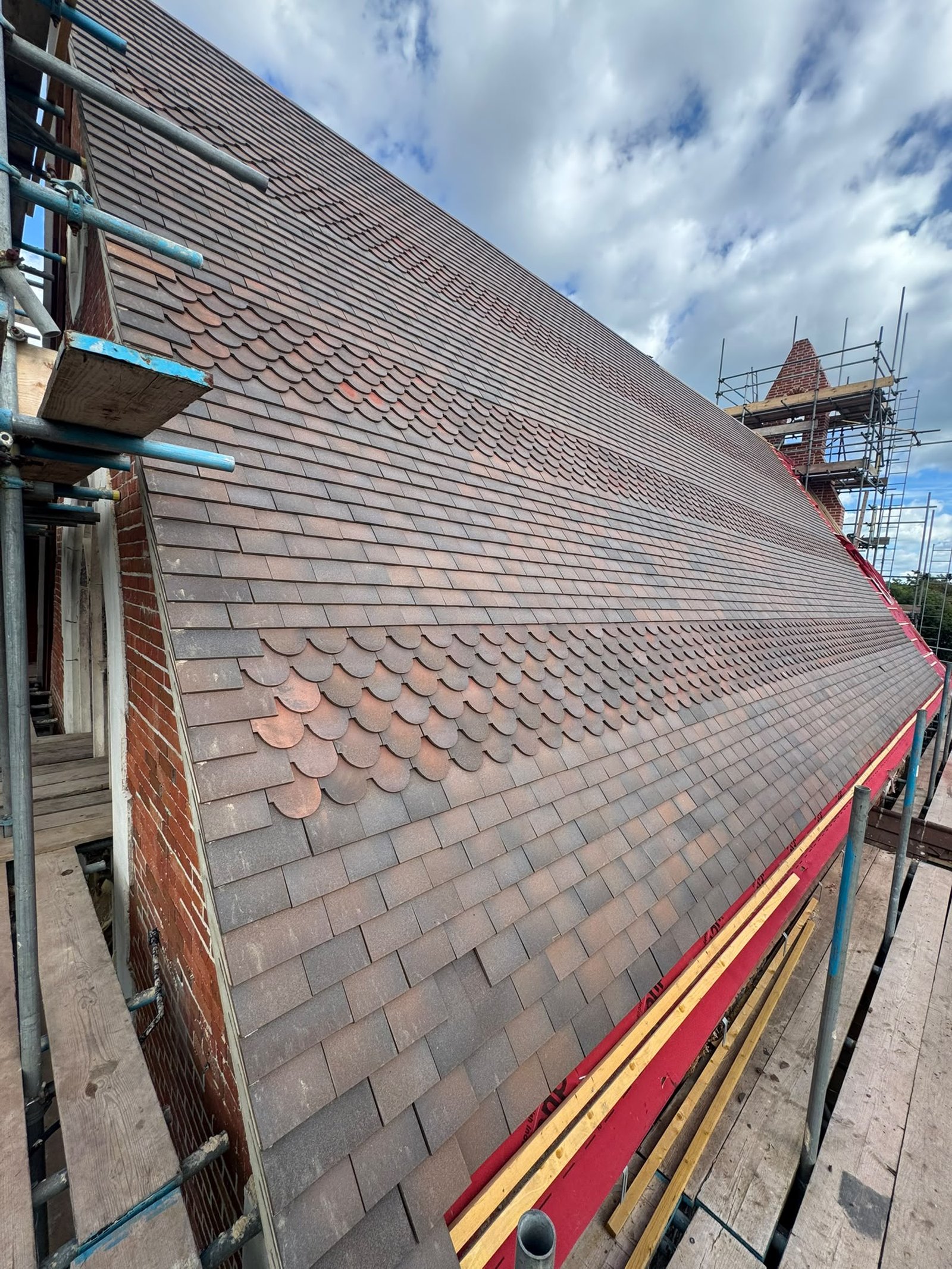
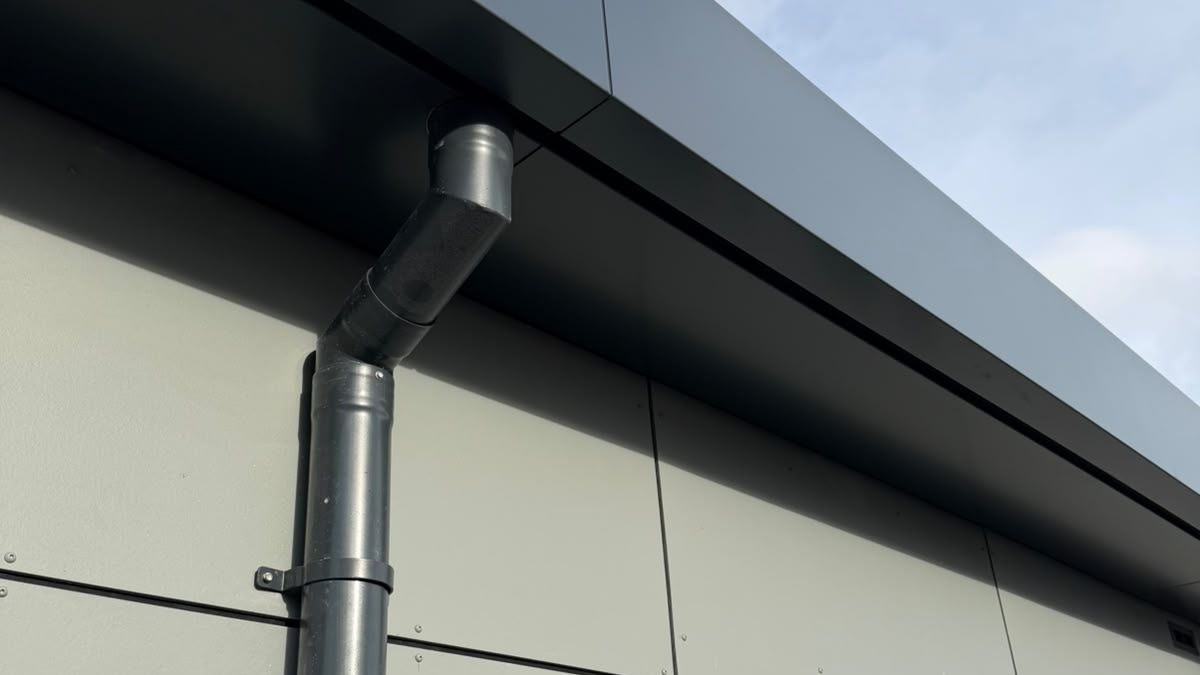
Gutters, downpipes and bespoke roof drainage, designed and installed to protect the building for the long term.
We install rainwater systems on new build and refurbishment projects for domestic, commercial and industrial buildings across the South of England, including Dorset, Hampshire, Wiltshire, Sussex and London, from Exeter in the west to Brighton in the east and as far north as Birmingham.

Rainwater Systems
Specialist rainwater management systems including gutters, downpipes and bespoke drainage solutions.
Designed and installed to ensure effective water control and the long-term protection of the building.

Sized for the Roof
Every rainwater system is designed around the roof it serves.
Roof area, rainfall intensity, gutter profile, fall and the position of each outlet all affect how much water a system can carry. Getting this right, in line with BS EN 12056-3, the British Standard for roof drainage, prevents overflowing gutters, damp walls and water pooling around the foundations. With heavier downpours becoming more common, correct sizing matters more than ever.
Materials & Finishes
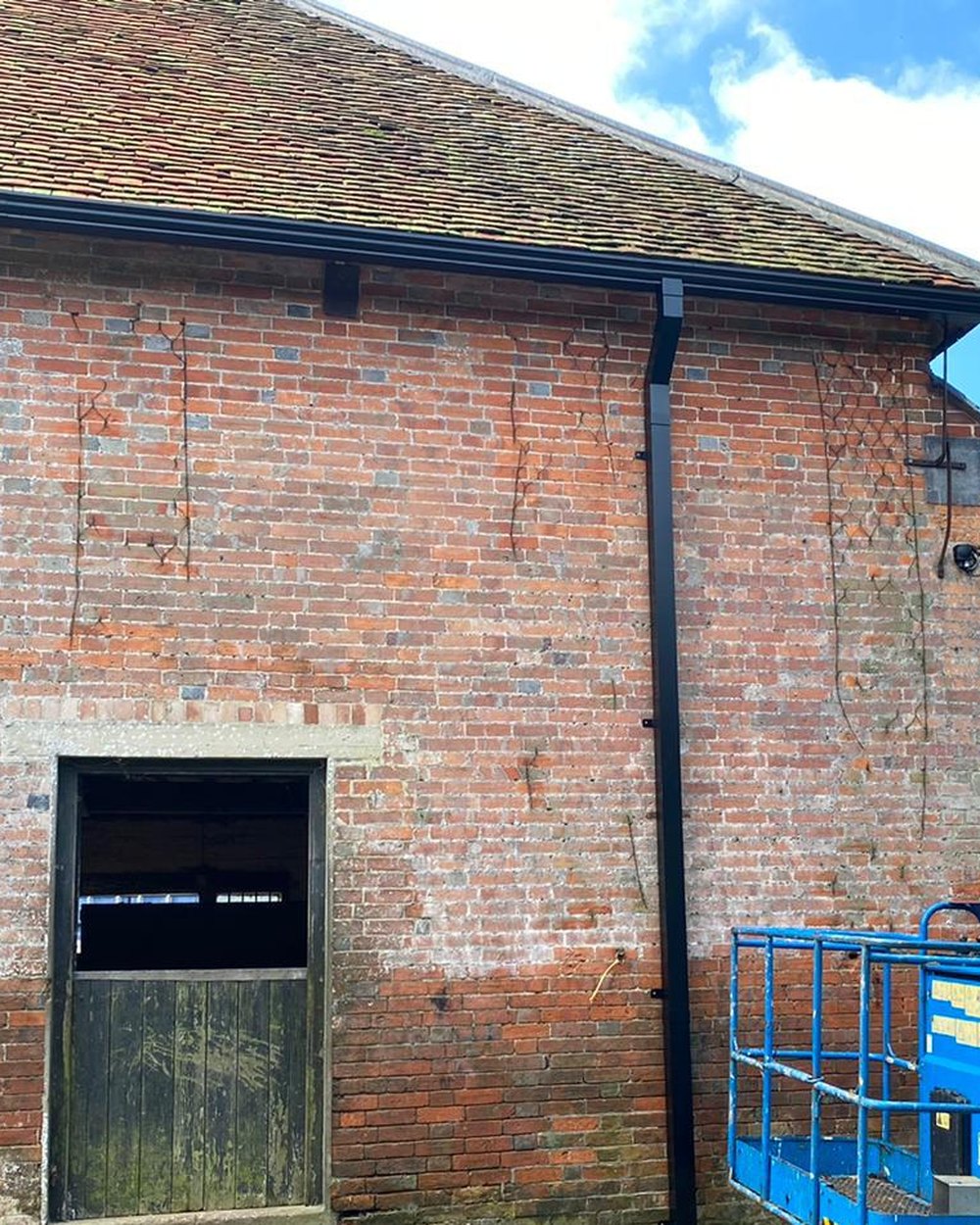
The right guttering material depends on the building, its setting and its budget.
Powder-coated aluminium is lightweight, low maintenance and can last 40 to 60 years, in a wide range of colours. Coated steel is common on industrial and commercial buildings, cast iron suits traditional and heritage properties and can last over 60 years, and uPVC is a lower-cost option with a shorter lifespan of around 20 to 30 years. We can advise on the best option for your project.
More Roofing
Frequently Asked Questions
Why does a building need a properly designed rainwater system?
Gutters and downpipes carry rainwater safely off the roof and away from the building. Without an effective system, water can overflow onto walls and collect around the base of the building, leading to damp, damage to finishes and saturated foundations. Rainwater drainage is also covered by Part H of the Building Regulations.
How are gutters and downpipes sized?
Sizing is based on the area of roof draining into each gutter and the rainfall intensity for the location, using the method in BS EN 12056-3. The gutter profile, its fall and the number and position of outlets all affect capacity, so each system is designed around the roof it serves.
Which guttering material is best?
It depends on the building. Powder-coated aluminium is lightweight, low maintenance and typically lasts 40 to 60 years. Coated steel is widely used on industrial and commercial buildings, cast iron suits traditional and heritage properties and can last over 60 years, and uPVC costs less but typically lasts around 20 to 30 years.
Can you replace or upgrade existing gutters and downpipes?
Yes. We replace failing or undersized gutters and downpipes, including as part of refurbishment projects, so the system matches the roof it needs to drain.
How often should gutters be cleaned?
Gutters and outlets should be checked and cleared regularly, usually at least once or twice a year, and more often on buildings near trees. Gutter guards can help reduce leaf blockages. Our maintenance service includes gutter, outlet and drainage clearance.
Which areas do you cover?
We work across the South of England, including Dorset, Hampshire, Wiltshire, Sussex and London, from Exeter in the west to Brighton in the east and as far north as Birmingham.
Recent projects